I redesigned Planview's Partner Portal to turn a growing repository of resources into a scalable enablement experience that made content easier for partners to find and for the business to manage.
Full experience view. Scroll to explore ↓
Planview's Partner Portal gave sales and implementation partners access to the resources they needed to work effectively with Planview, but the experience had become difficult to navigate.
Content had accumulated over time in long tables of links, creating a growing resource catalog with little hierarchy or guidance about where to begin. The structure also made it difficult for Partner Enablement to manage the collection as resources were added, updated, or became obsolete.
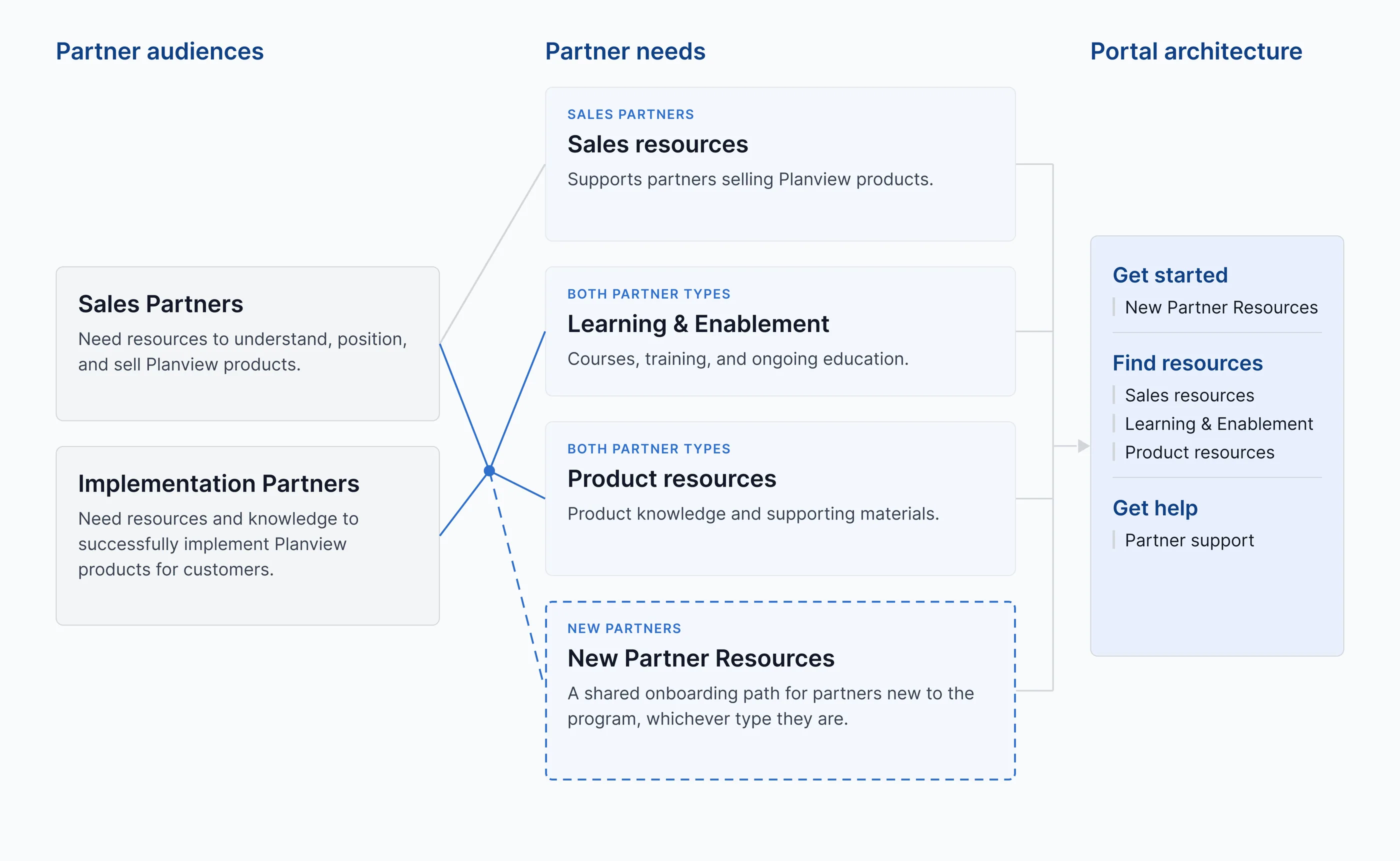
The challenge was complicated by the needs of different partner audiences. Sales partners needed resources to understand and position Planview products, while implementation partners needed the knowledge and training to deliver them successfully. Many resources, including product information and partner education, were relevant to both.
The opportunity was to create an experience that made resources easier for partners to find while giving Partner Enablement a clearer, more scalable way to organize and maintain them.
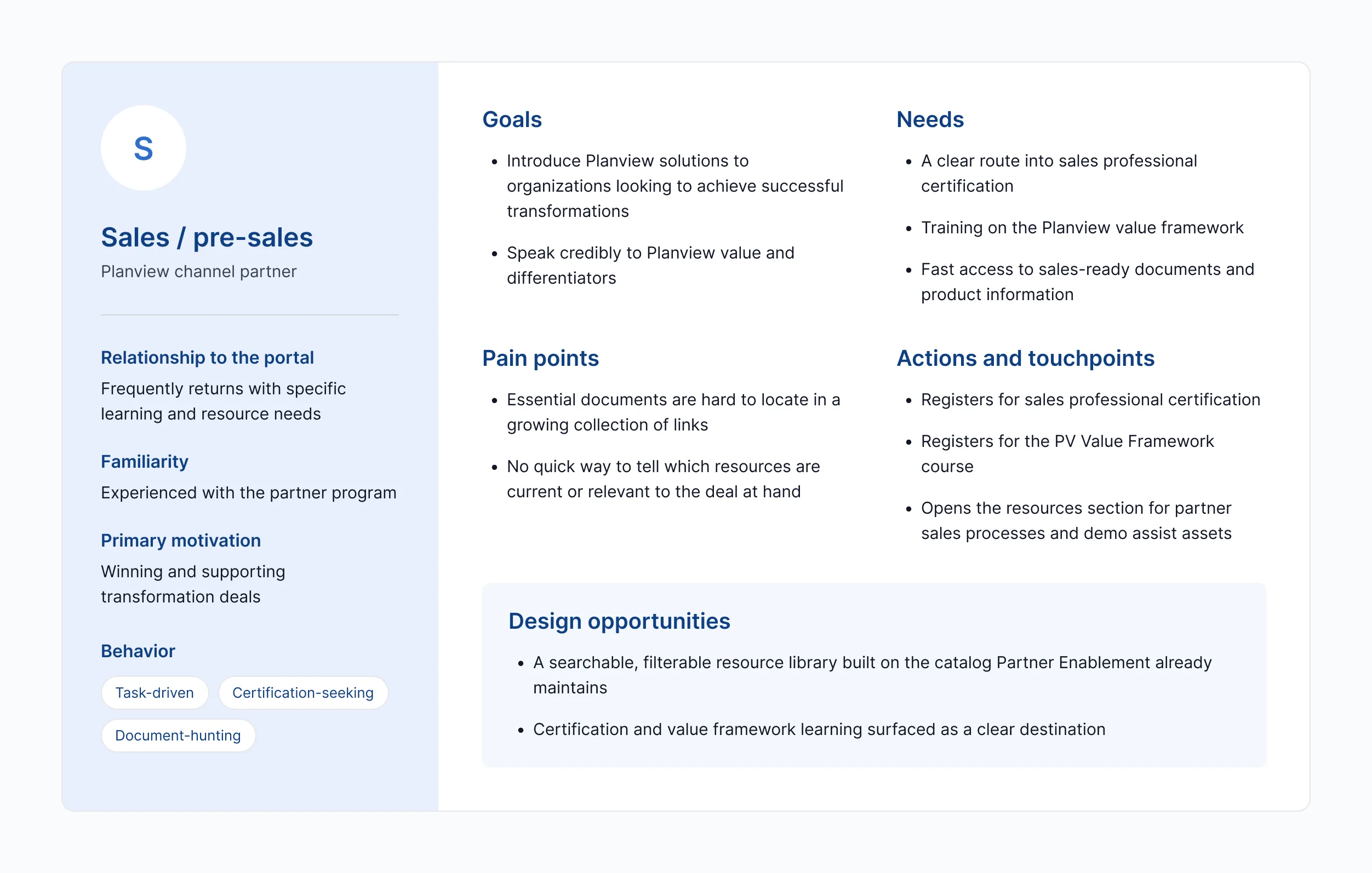
I worked with Partner Enablement to audit the existing resource catalog, remove outdated content, and map partner needs to key actions across onboarding, sales and pre-sales, and service delivery. The exercise revealed both distinct and overlapping needs: new partners needed orientation and training, sales partners needed certification and positioning resources, and service delivery partners needed enablement and implementation guidance.
I used these patterns to shape the information architecture without forcing partners into rigid role-based pathways. As I reviewed the framework and emerging structure with Partner Enablement, the categories evolved to better reflect how partners needed to access resources.
Mapping shared and distinct partner needs helped inform the information architecture. Representative artifact recreated for this portfolio based on the original project structure.
The central design challenge was creating enough structure to make a growing resource ecosystem useful to partners without making it harder for Partner Enablement to maintain and expand.
I created a layered information architecture that separated onboarding, ongoing resource needs, and support:
This approach reduced the number of decisions partners had to make at once. Instead of scanning individual links, partners could first identify what they needed, move into a focused resource area, and progressively narrow the information presented to them.
Clear resource pathways improved wayfinding across sales, product, and learning content.
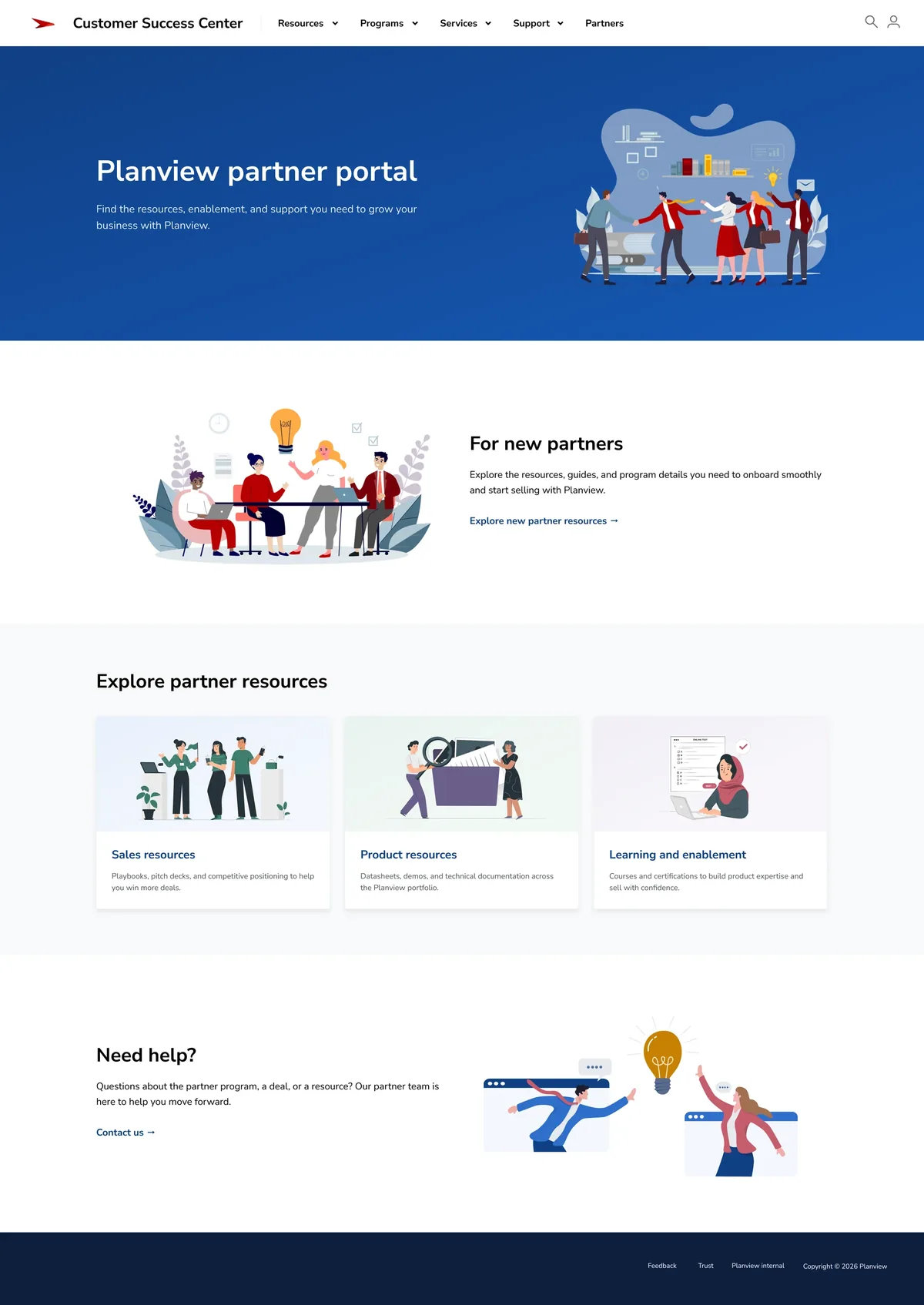
Rather than exposing the entire resource catalog at once, I created dedicated destinations for major partner needs. Sales Resources brought together the tools sales partners used to position Planview solutions and move opportunities forward, including marketing materials, pricing, sales processes, competitive resources, and product information.
These destinations created a meaningful layer between the portal homepage and individual assets. Partners could narrow the experience to a relevant set of resources before choosing a specific document, tool, or destination.
Focused destinations helped partners narrow a large resource ecosystem before reaching individual assets. Scroll to explore ↓
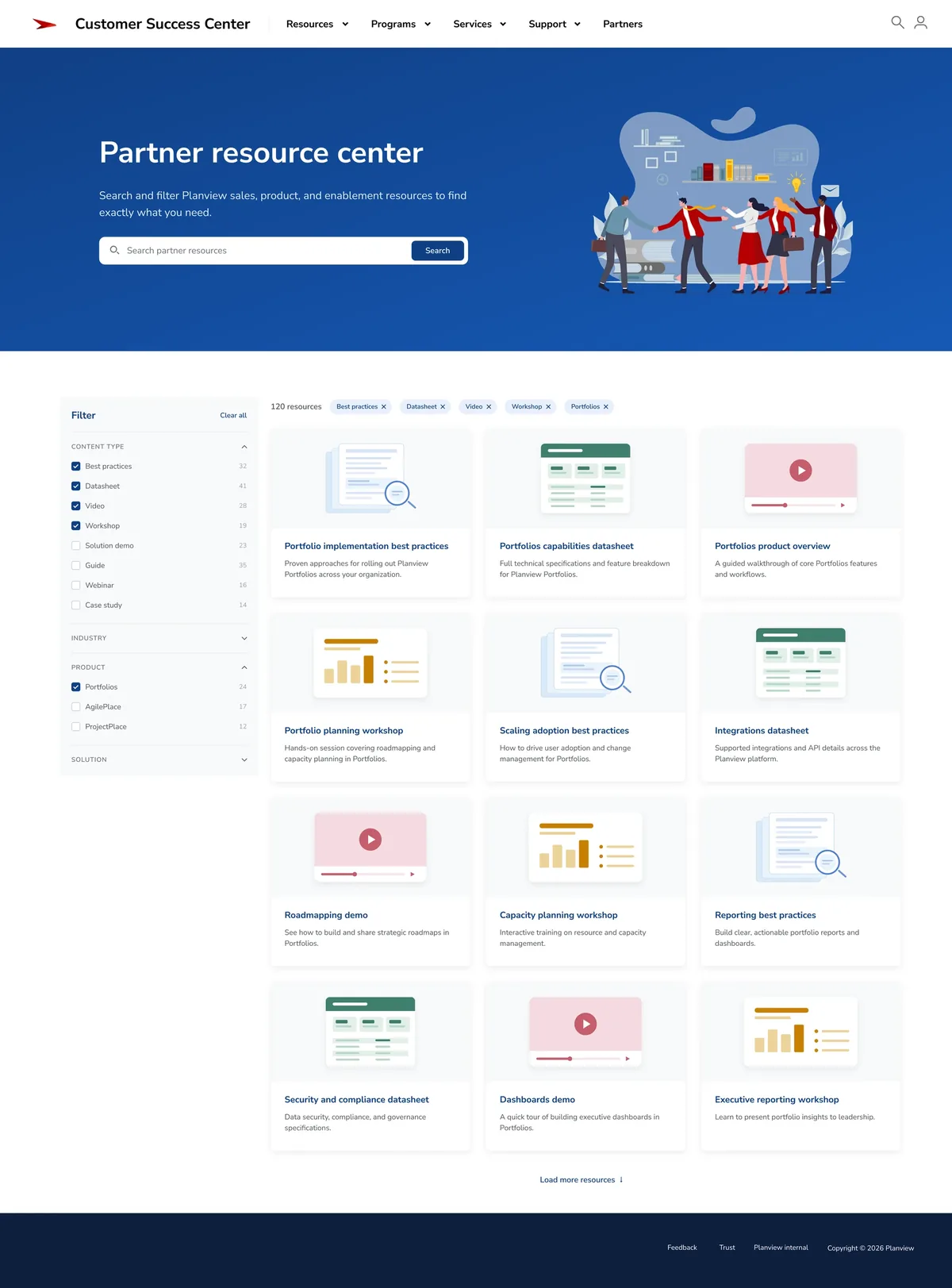
Focused pathways helped partners browse the experience, but the broader catalog also needed to support partners who arrived looking for something specific.
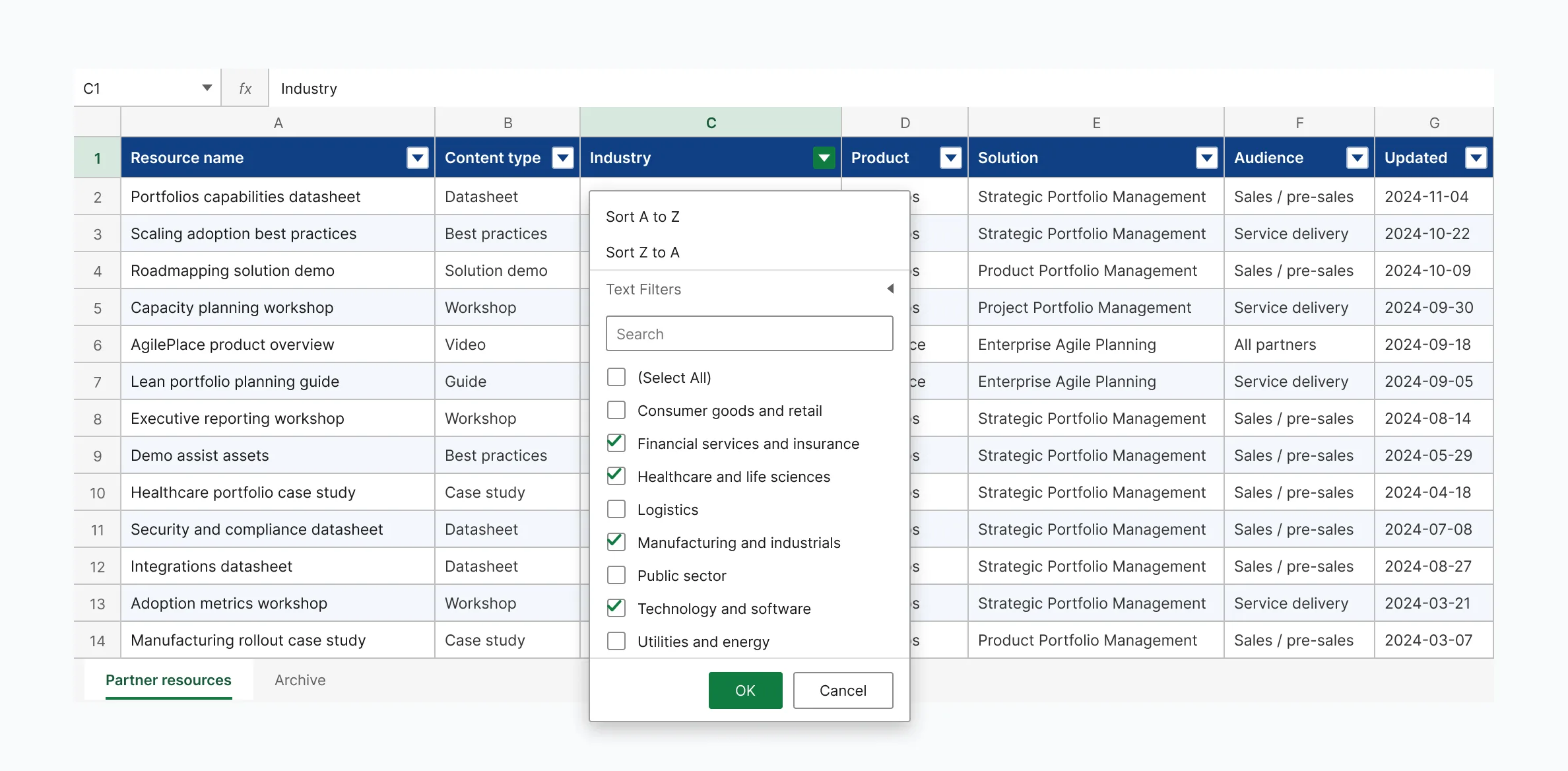
Partner Enablement already managed resource links in a spreadsheet, a workflow that worked well for the team. Rather than replacing that process or requiring them to maintain the same information separately in the CMS, I designed the Partner Resource Center around it.
I expanded the spreadsheet into a structured content source, defining the fields needed to support resource cards, search, and filtering. Working with my web developer, I translated that content model into the technical requirements for a coded system that parsed the spreadsheet data and dynamically generated the library's cards and filter options.
Partner Enablement could continue maintaining resources in the tool they already knew, then upload the updated spreadsheet to keep the library current. This avoided duplicate content management and allowed the team to update the experience without learning the CMS in depth.
For partners, the result was a searchable, filterable library spanning sales, product, and enablement resources. For Partner Enablement, the underlying workflow remained familiar and manageable. Partner feedback was especially positive around the library, reinforcing the value of giving partners a faster way to locate specific materials.
A spreadsheet-driven system powered resource cards and filters while preserving the team's existing workflow. Scroll to explore ↓
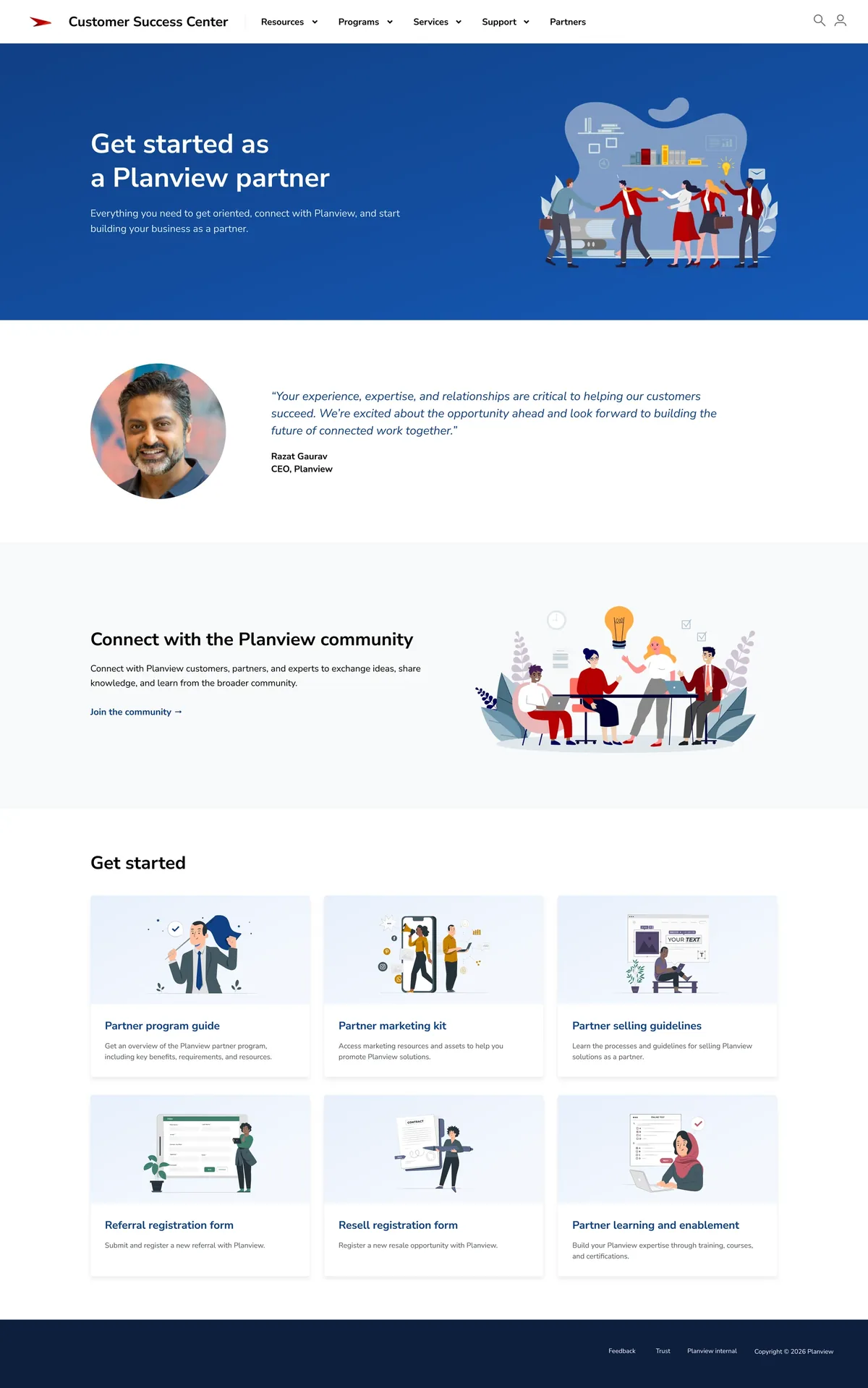
New partners presented a different information need. Regardless of whether they sold or implemented Planview products, they first needed orientation to the partner program and access to foundational resources.
I created a dedicated New Partner resource hub that brought program guidance, registration, learning, and other onboarding resources into a single starting point rather than requiring new partners to discover them throughout the broader experience.
Foundational resources gave new partners a clear place to begin. Scroll to explore ↓
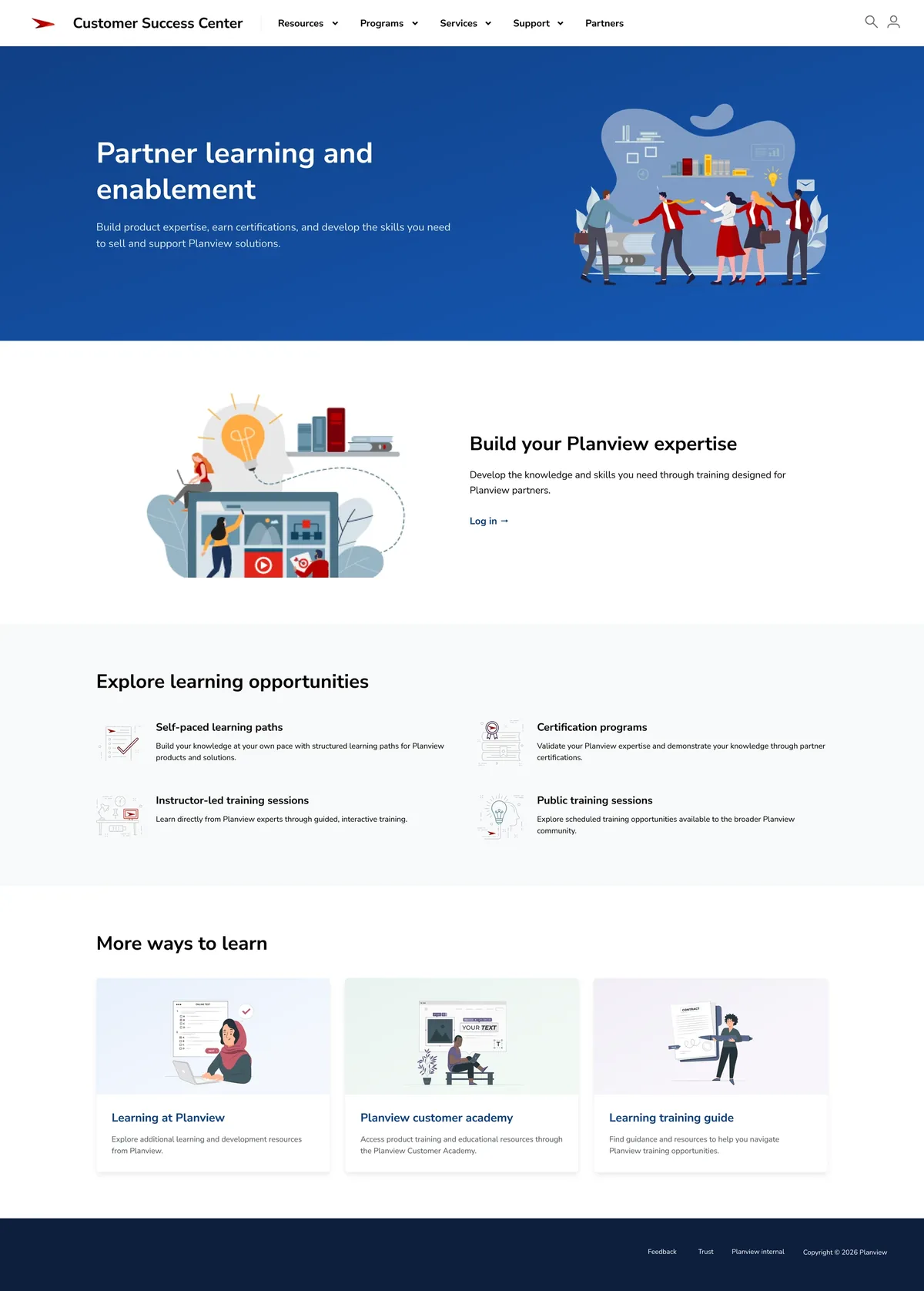
Learning and enablement was relevant across partner types, making it an important shared destination within the experience.
I designed Learning & Enablement to connect partners with training, learning paths, certification programs, and other educational opportunities while keeping those resources distinct from the broader sales and product catalog.
A shared destination connected partners with training and education. Scroll to explore ↓
The redesigned Partner Portal transformed a sprawling collection of links into a more focused, navigable enablement experience without creating a more complicated publishing process behind it.
Working with Partner Enablement, I reduced outdated content, introduced clearer pathways for new and established partners, and turned the team's existing resource spreadsheet into the structured source behind a searchable, filterable library.
Partner feedback was especially positive around the resource library, while Partner Enablement could continue maintaining content through a workflow they already understood. The resulting system made resources easier for partners to find and easier for the business to keep current as the catalog evolved.
This project reinforced the value of designing for the entire system, not just the partner-facing experience.
A scalable solution has to work for the people using the experience and the people responsible for keeping it running.
By building on a workflow Partner Enablement already trusted, I could improve the partner experience without creating additional complexity behind it.