As the lead UX designer for Planview’s Customer Success Center, I transformed a growing documentation portal into a cohesive customer platform by redesigning its information architecture, navigation, and design system. The result was a scalable foundation that improved discoverability while supporting the platform’s continued growth.
The Customer Success Center began as a documentation portal, but over time it grew into a comprehensive customer platform supporting product documentation, learning, Professional Services, customer programs, release information, and community resources.
Each addition supported an important business objective, from improving product adoption to expanding customer engagement, but the experience evolved incrementally. Navigation, visual language, and content organization no longer reflected the breadth of the platform, making it increasingly difficult for customers to understand what was available or where to begin.
The Customer Success Center needed to evolve from a collection of customer resources into a unified platform that could support both current needs and future business initiatives.
Without a shared information architecture or design system, every new initiative introduced additional complexity and design drift. My challenge was to create a more cohesive experience that improved navigation while establishing a foundation that could continue evolving alongside the platform.
Before

Original homepage before redesign. Scroll to explore ↓
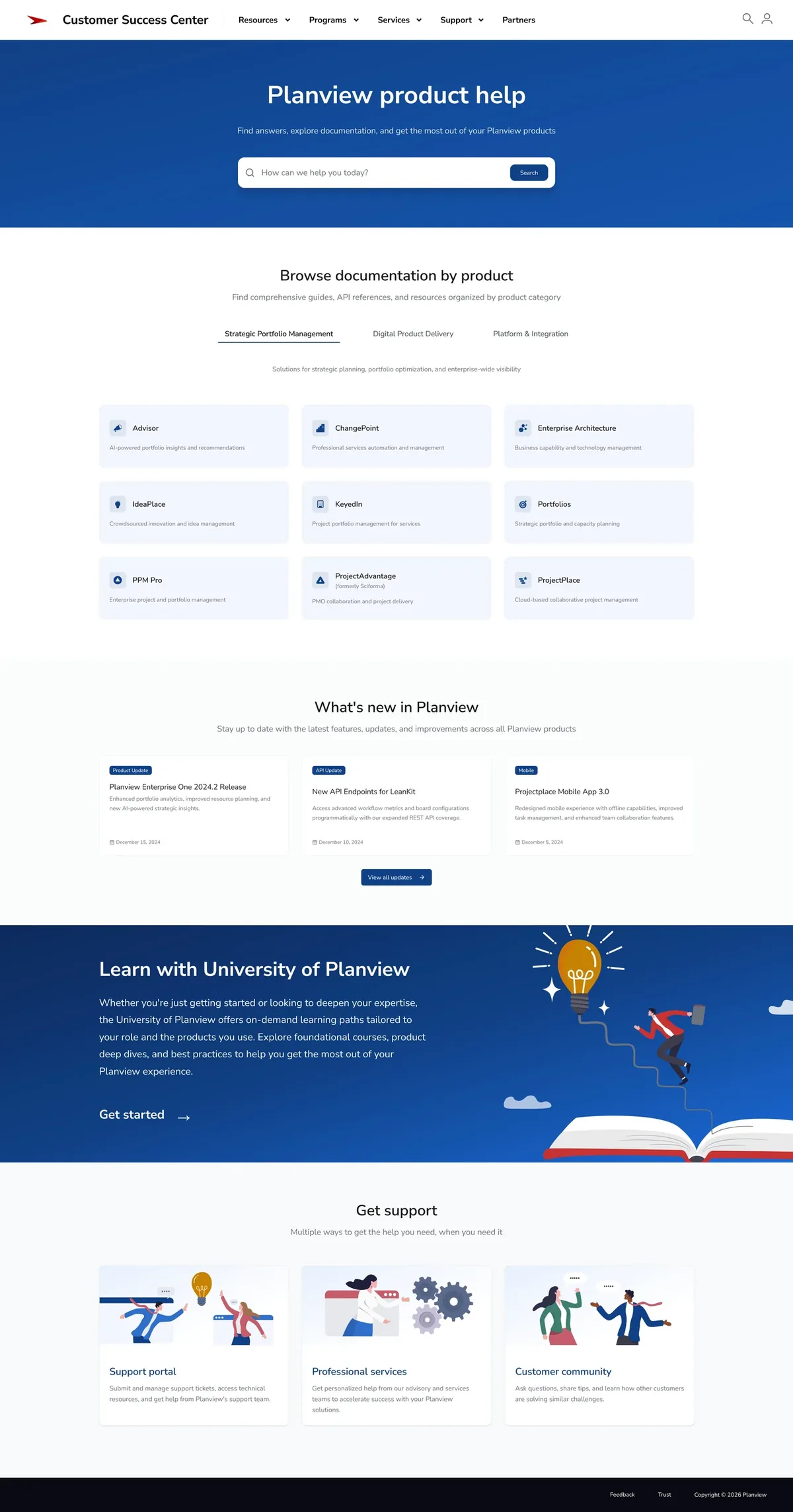
After

Redesigned homepage with the new illustration system. Scroll to explore ↓
Before exploring solutions, I conducted a customer survey to understand how people used the Customer Success Center, what they struggled to find, and where the experience fell short. Thirty customers identified three recurring challenges: finding information unless they already knew the exact terminology, navigating and searching by product, and scanning dense, inconsistent page layouts.
These findings showed that the challenge extended beyond visual consistency. Customers needed clearer pathways through the CSC, stronger orientation within the broader Planview platform, and interfaces that helped them quickly understand where to go next.
I paired these findings with a UX audit of the existing experience, documenting navigation patterns, component usage, and inconsistencies across the platform. I also used Claude to organize audit findings, synthesize recurring themes, and explore alternative information architectures before validating recommendations through research and stakeholder conversations.
Across the research, a clear direction emerged: customers didn’t think in terms of Planview’s internal teams or content ownership. They thought in terms of goals, products, and the tasks they were trying to accomplish. The redesign needed to reflect those mental models while creating a structure that could continue evolving as the platform expanded.
Research synthesis connecting customer feedback to the key experience challenges that shaped the redesign.
Organize the experience according to what customers were trying to accomplish, not how Planview organized its teams.
Create reusable patterns that could accommodate future products, services, and customer initiatives without introducing new complexity.
Make navigation, layouts, and interactions predictable so customers could focus on their goals rather than learning the interface.
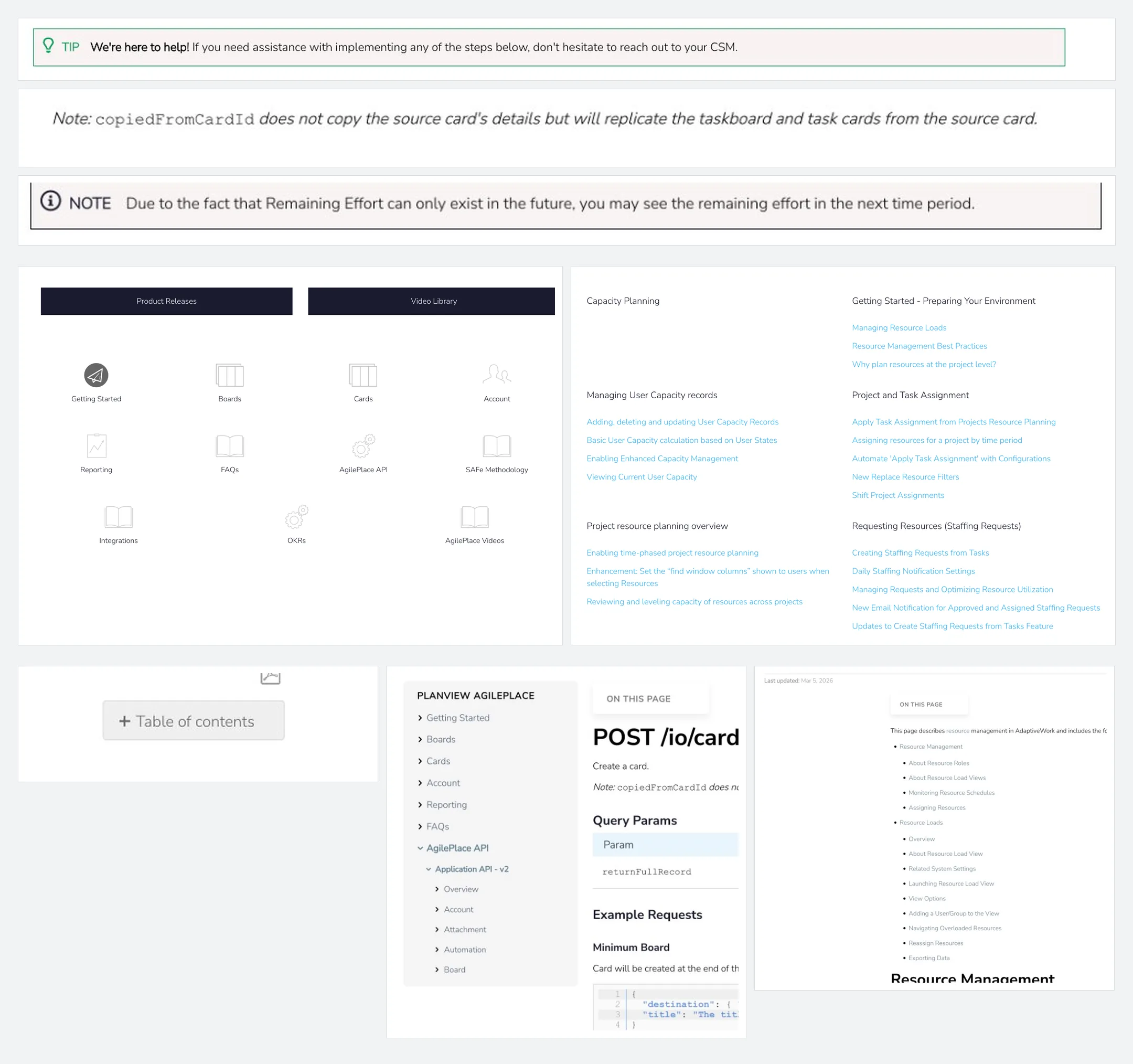
Creating a design system wasn’t simply about visual consistency. As the Customer Success Center expanded, every new initiative introduced additional layouts, interaction patterns, and visual styles. Without shared foundations, the platform became increasingly difficult to maintain, and every new experience risked adding more complexity for customers.
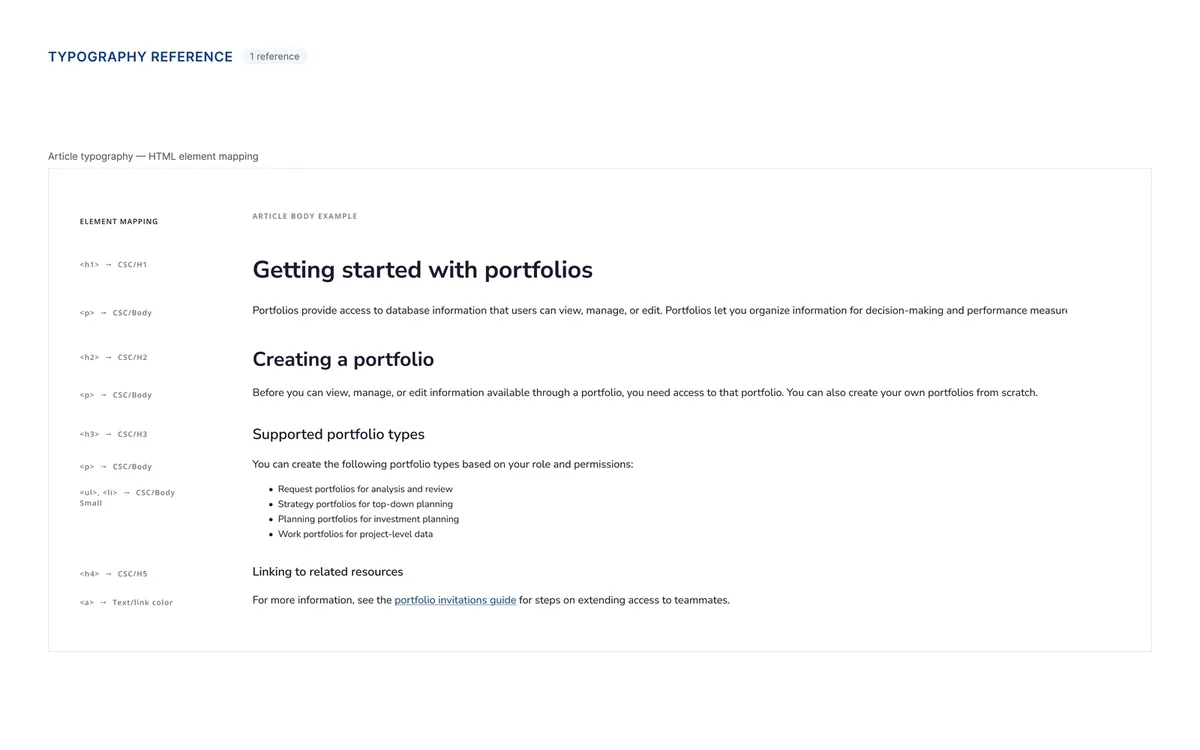
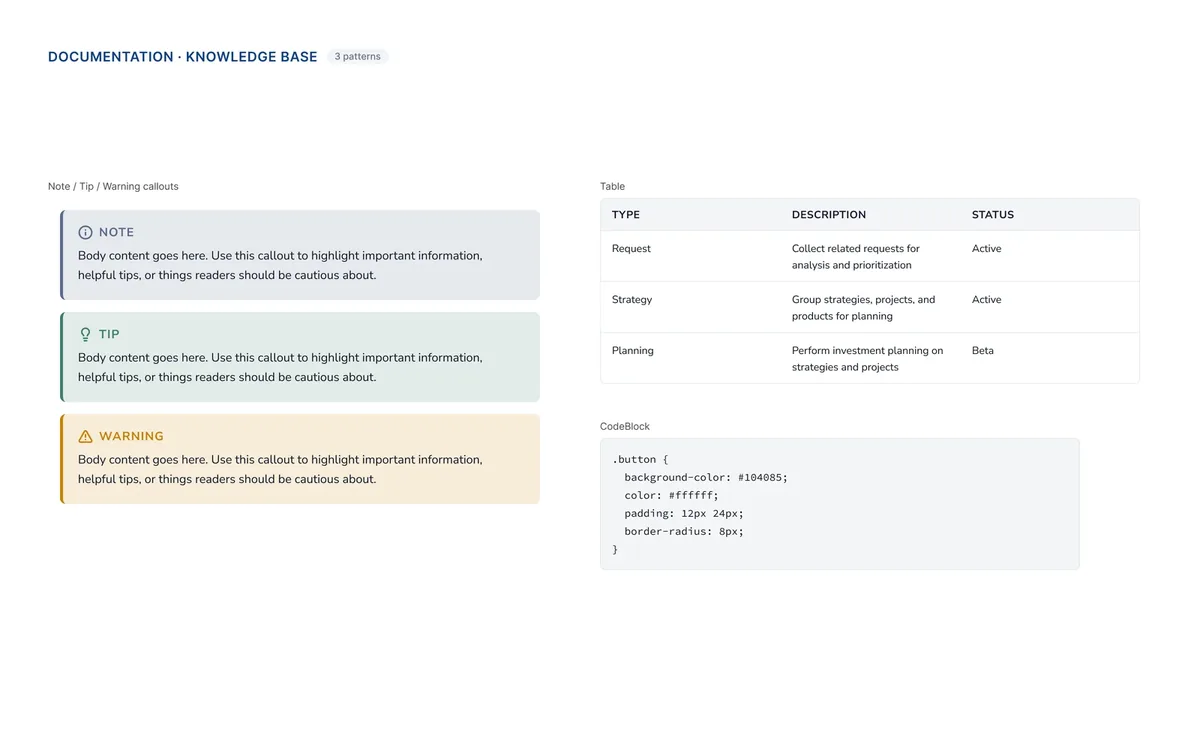
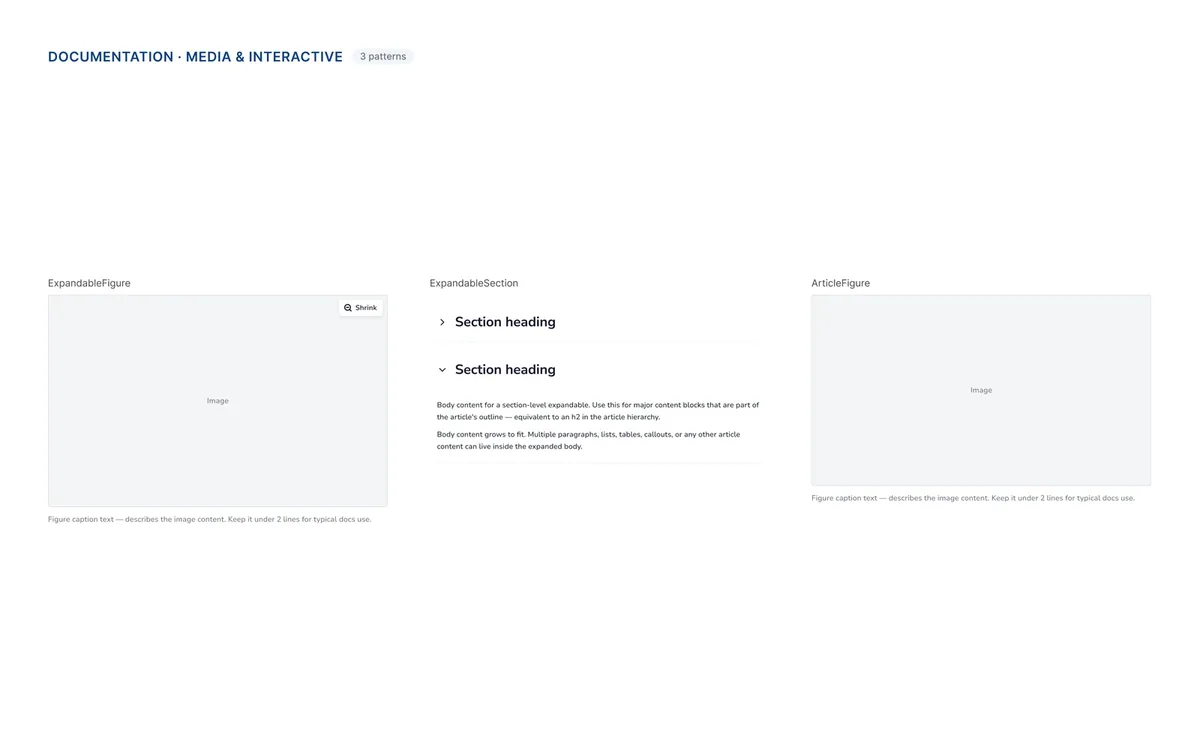
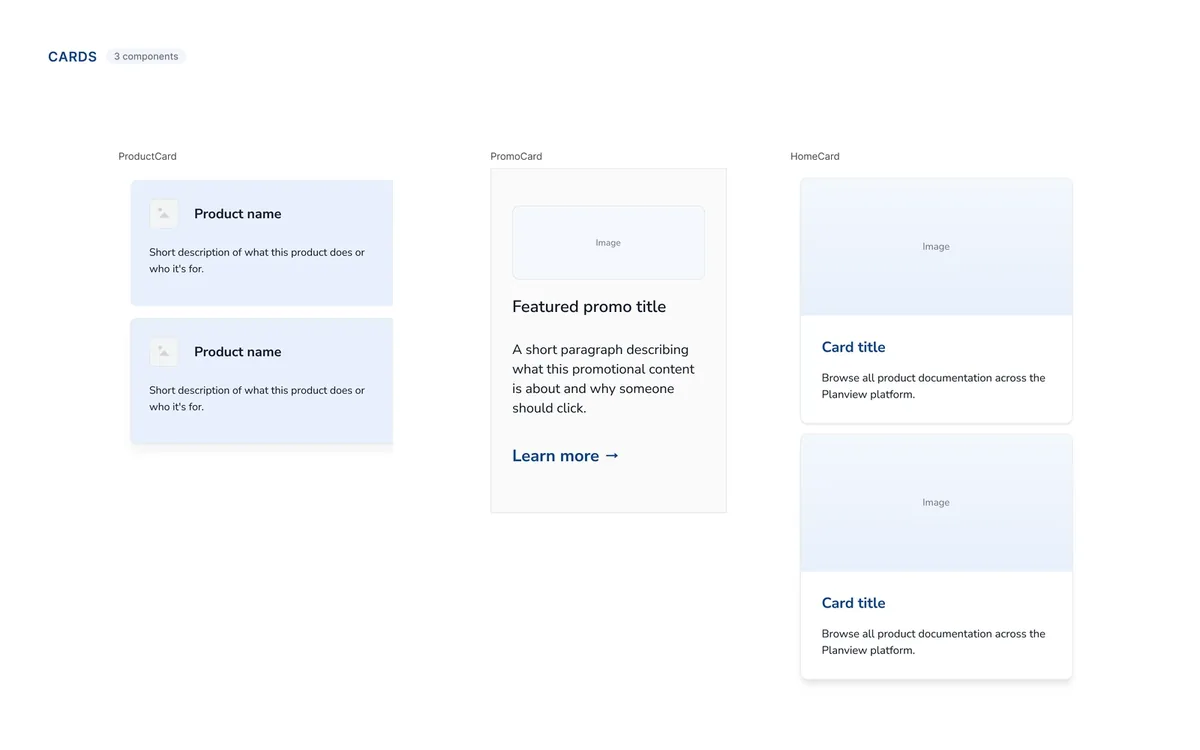
I established a shared design foundation of reusable components, design tokens, typography, and documentation that enabled new customer experiences to be added without reinventing the interface each time. Together, these patterns established predictable interactions across the CSC while giving future projects a foundation to build upon rather than reinvent.
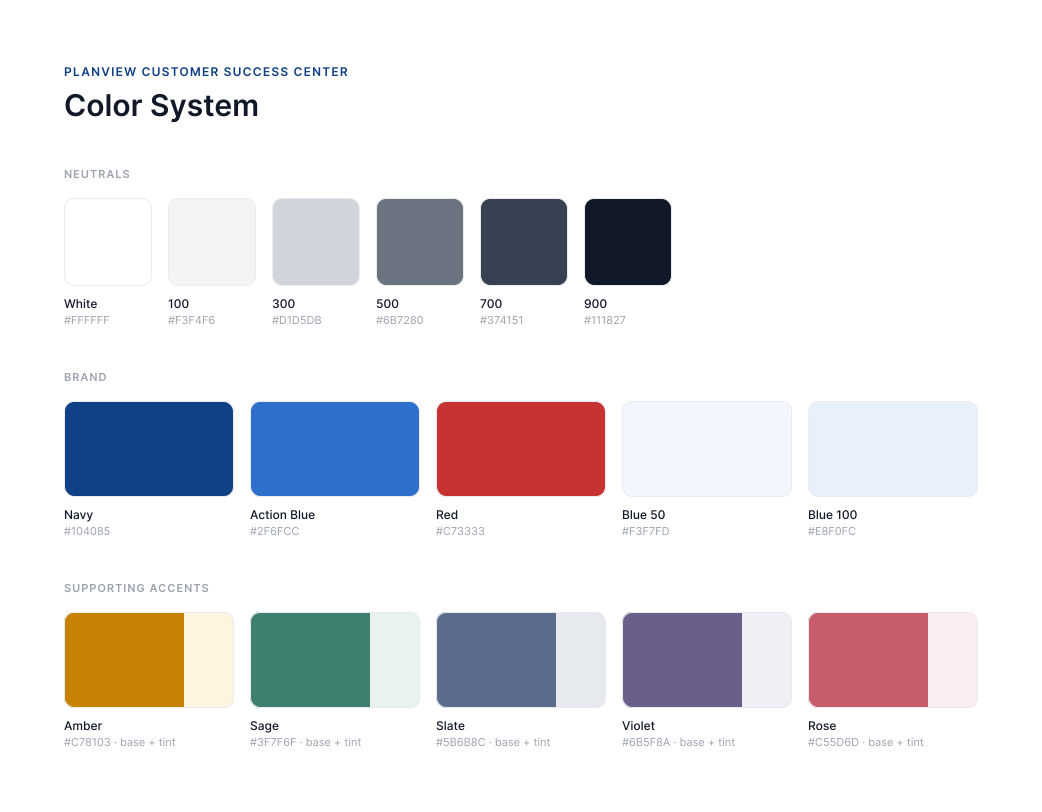
Using Figma variables, I aligned the system with Planview’s existing product design language while introducing semantic color roles and standardized patterns tailored to customer-facing experiences.
Throughout the project, I used Claude and Figma AI to rapidly prototype new components, explore alternative layouts, and iterate on page concepts before refining them into production-ready designs. This allowed me to evaluate more design directions early while spending more time validating decisions with stakeholders and ensuring solutions fit customer needs, business goals, and the platform’s technical constraints.
Design system library. Swipe or use the arrows to browse.
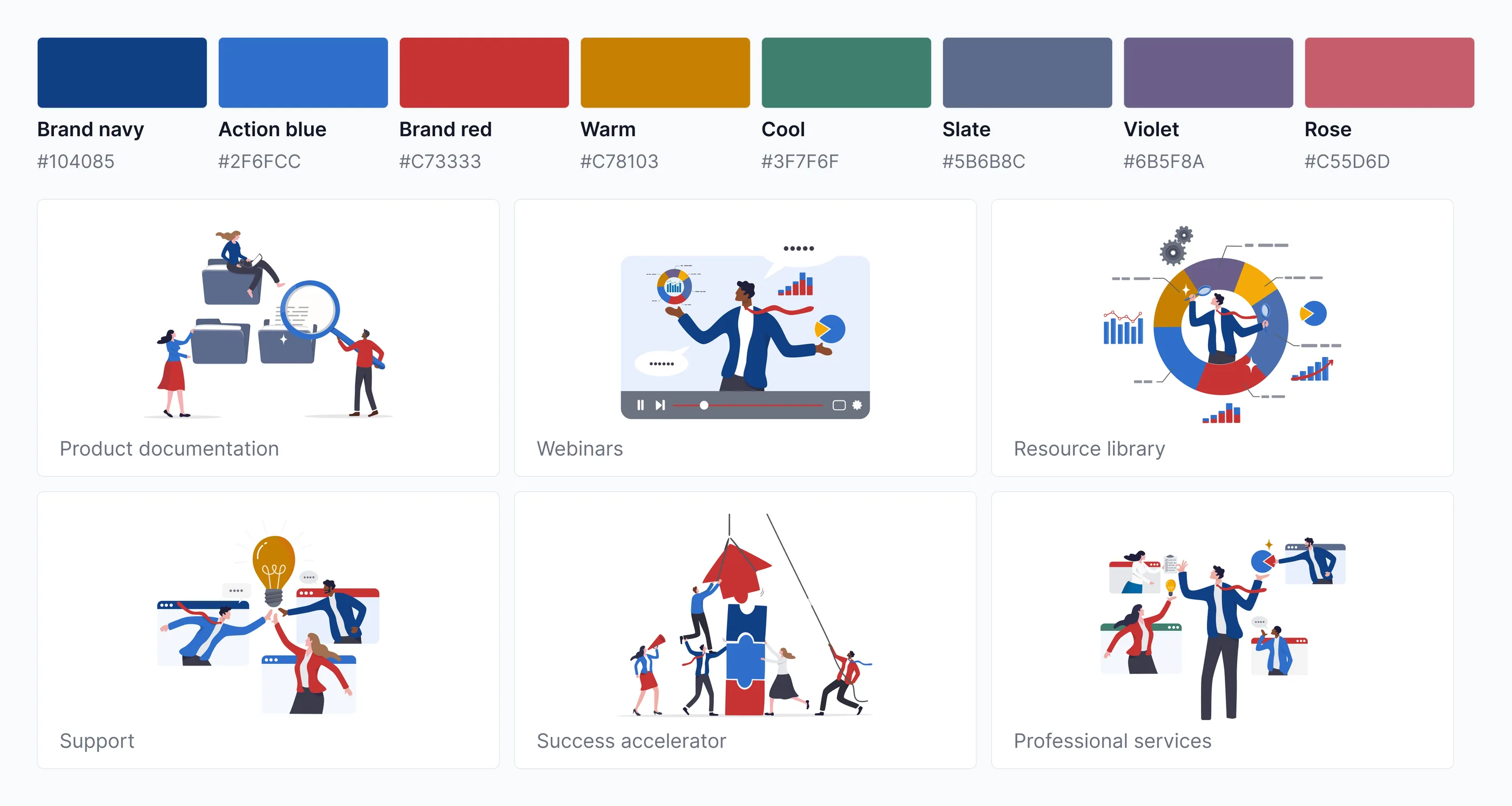
The CSC also needed a visual identity of its own. I directed a graphic designer to move the platform away from the stock photography inherited from the marketing site toward a custom illustration system. I defined the visual direction and use cases, then worked with the designer through multiple rounds of iteration. The resulting illustration system gave the CSC a distinct visual identity while helping customers recognize they were still within a unified experience regardless of which section of the platform they visited.
As the Customer Success Center expanded, new content types were introduced to support evolving business priorities, from Professional Services and customer programs to adoption resources and community experiences. Each initiative solved an individual business need, but together they made the platform increasingly difficult to navigate.
Drawing on customer research, I reorganized the navigation around customer goals and product context rather than internal teams or content ownership. I rapidly explored multiple navigation structures and page layouts using AI before evaluating each against customer research, business goals, and CMS constraints. Related resources were grouped together, clearer relationships were established between services, and featured content helped orient customers before they drilled into specific destinations.
The resulting navigation reduced the amount of interpretation required to move through the platform, making the growing ecosystem feel unified rather than fragmented while providing a framework that could accommodate future expansion.
Global navigation redesign with clearer organization and improved wayfinding.
Survey participants wanted an experience centered around the product they were using rather than the broader Planview platform. While the redesigned global navigation improved wayfinding, customers still needed a clear starting point for navigating Planview’s growing product ecosystem.
I designed a centralized platform hub that brought Planview’s products together in one place and connected each to relevant documentation, release notes, platform news, learning resources, Support, Professional Services, and the Customer Community.
Together with the redesigned navigation and component system, the platform hub established a predictable framework that helped customers orient themselves quickly, move confidently between resources, and discover services they might not otherwise have found.

Platform hub connecting products with documentation, learning, release information, and customer resources. Scroll to explore ↓
The redesign established the Customer Success Center’s first design system and transformed a growing collection of customer resources into a cohesive customer platform. Standardized components and a scalable information architecture reduced design drift while making it easier for customers to navigate between products, learning resources, services, and support.
The platform continued evolving on this foundation for years after launch. During that period, Customer Satisfaction (CSAT) increased by 10 points alongside broader improvements to the customer experience.
This project reinforced that AI is most valuable when accelerating exploration rather than replacing design judgment. Rapid prototyping and iteration created more opportunities to evaluate ideas, but understanding customer behavior, balancing business priorities, and designing systems that could evolve over time remained fundamentally human work.